29th Oct: New Outboard Test
I had bought an Epropulsion Spirit 2 outboard from Force 4 at Shamrock Quay in Southampton on 1st October. This was to replace my Torqeedo 1003 outboard which was bought sometime before Seatern arrived, i.e. before 2013, more than 10 years ago. Of the 2 Torqeedo batteries, only one is still working reliably and I would not trust it for extended motoring on the river.
I had almost bought an Epropulsion Spirit 1 Evo outboard at the Boat Show. The guy on the Nestaway stand had said that the Spirit 2 model was too much for a 15 foot sailing dinghy. I wanted the Evo model, not so much because it can recharge the battery under sail, unless planing Seatern would not be moving fast enough, but because I did not want to have to lift the outboard every time when sailing. However, the more I thought about it, the Spirit 2 model had various very desirable features marking it as an advance on the Spirit 1 Evo.
These included:
- the “Evo” recharge feature allowing the outboard to be left down when sailing
- GPS derived speed which I liked on the Torqeedo and is not on the Spirit 1
- ability to lock and unlock the steering without removing the battery
- ability to detach the motor from the engine mount which can remain on the transom
- greater power or longer range – lack of thrust was a problem with the Torqeedo
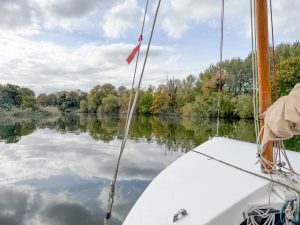
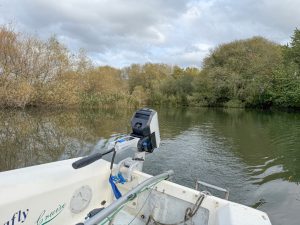
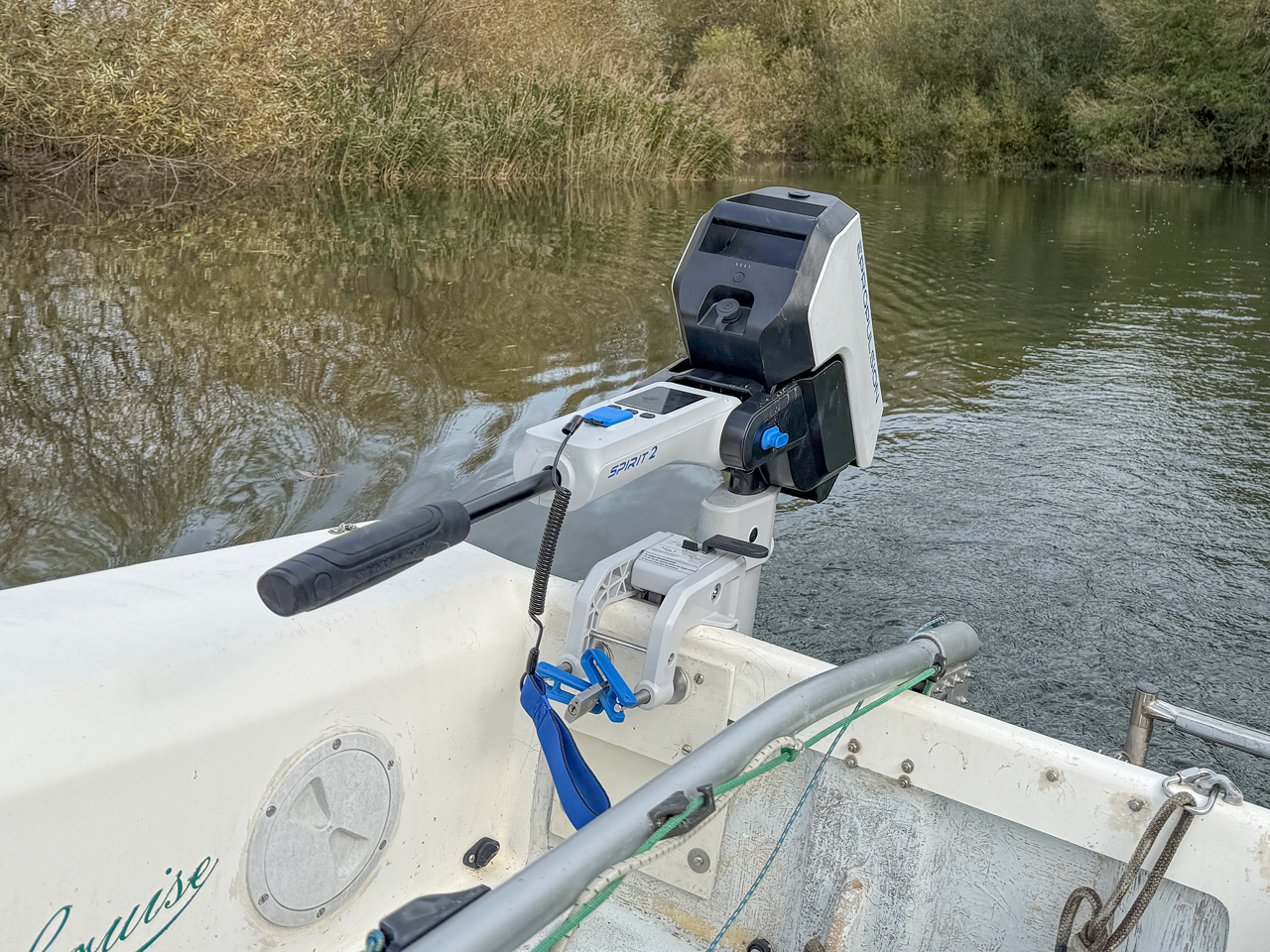 However a disadvantage of the Spirit 2 is the extra weight. When I first tried it on the Seafly I did not feel the transom was sturdy enough so I reinforced it using some leftover Robbins marine ply and teak from my shed bolted and glued (using CT-1) in place. About a week later, after some poor tides and wet weather, I had a chance to test the outboard. Just in case I took along the Torqeedo as well, and of course I had a paddle and the mainsail if all else failed.
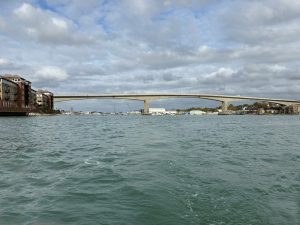
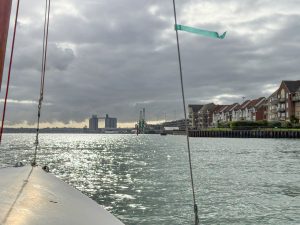
After going under Itchen Bridge
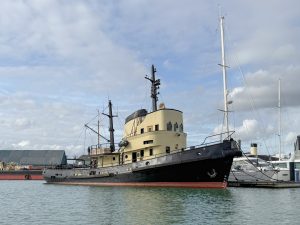
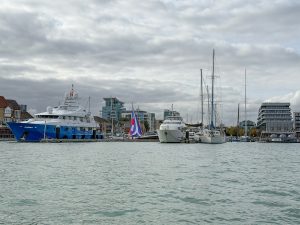
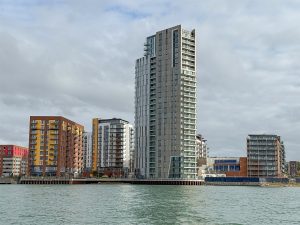
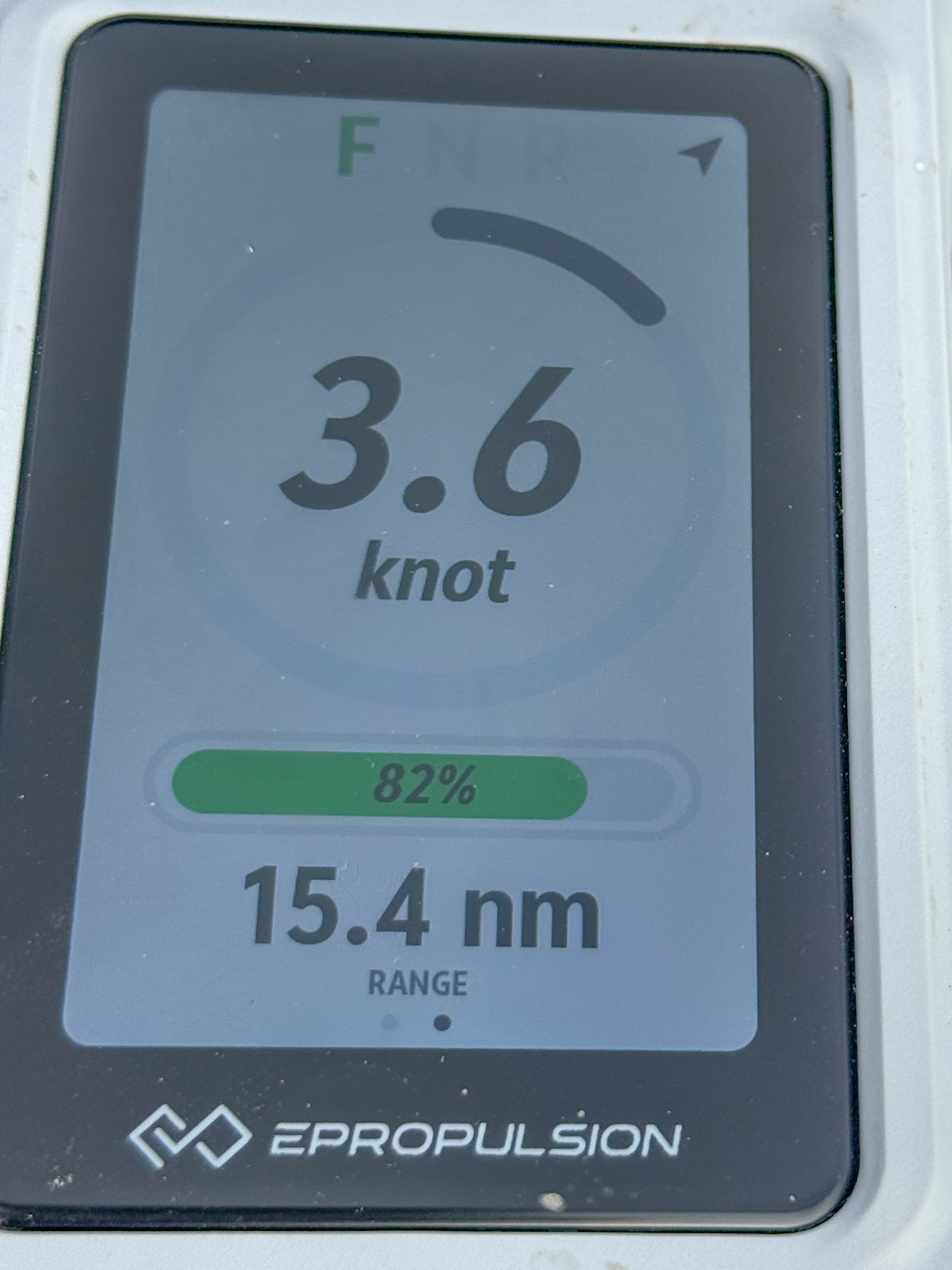
I went up to Woodmill and then back down to the entrance to Ocean Village, mostly at about 3.5 knots and steering with the Seafly rudder. That would be about 5nm at which point the battery was showing 82% with another 15nm available. So an average of about 3.6% of battery per nm at that speed. Going back to the jetty was about another 2nm implying about 7.2% battery and indeed the battery was down to about 75% by the time I was back. 25% of the battery giving about 7nm suggests a total range of about 28nm, or say 25nm to be safer.
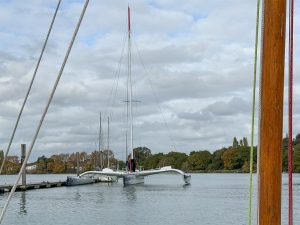
I switched over to tiller control to go into the jetty stern first but had to dismount the Seafly rudder to stop it dragging in the water. It would be good to get the weight of the battery off the transom using a cable connection.